
Replacing a hydrotherapy pool is an opportunity to rethink how the space supports your program today and how it may need to perform in the years ahead.
When replacing a hydrotherapy pool, consider how the new system will fit the space, support the program, and remain reliable and practical to own over time.
Start With How the Hydrotherapy Pool Will Be Used
A replacement project is a good time to define what the therapy or training program needs today rather than automatically recreating the previous setup.
Also consider what you may have wanted to offer but could not support with the existing pool. That could include expanding rehabilitation options, adding new training applications, or introducing group exercise classes.
Consider activities such as:
- Rehabilitation and recovery
- Gait and mobility work
- Resistance exercise
- Conditioning and training
- Return-to-activity programs
- Low-impact exercise
- Group exercise classes
Also consider who uses the hydrotherapy pool and how staff work within the space.
A healthcare facility may need to accommodate patients with different mobility levels and rehabilitation goals. An athletic program may need the same space to support recovery, rehabilitation, conditioning, and progressive training.
Starting with those needs helps inform decisions about flow, depth, interior configuration, equipment, and the way the surrounding room should function.
Use the Replacement to Rethink the Whole Space
Once you understand how the hydrotherapy pool needs to be used, look at the room as a whole.
A replacement project does not have to recreate the previous layout. It can be an opportunity to reconsider how therapy, rehabilitation, recovery, and training fit together within the existing footprint.
Ask questions such as:
- Which activities need the most space?
- How should different hydrotherapy functions relate to one another?
- Where do clinicians or athletic trainers need room to work?
- Could changes to the pool configuration make better use of the available footprint?
- How should equipment, service access, and surrounding circulation be incorporated into the layout?
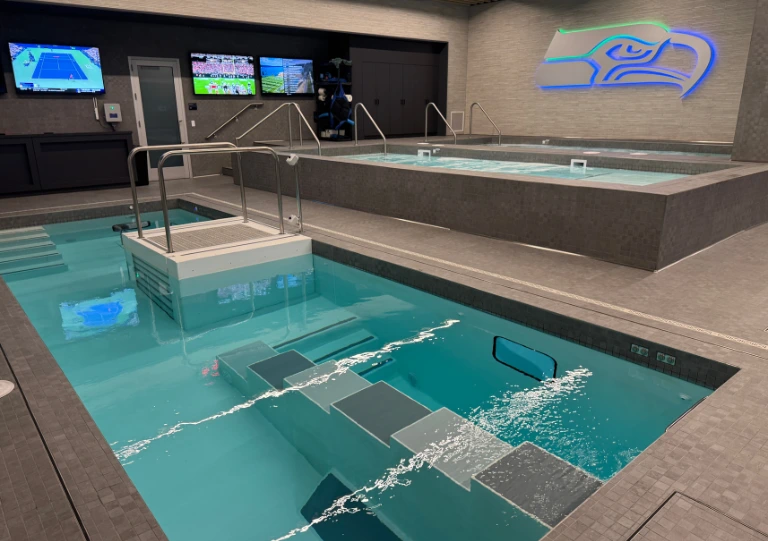
The Seattle Seahawks offer a useful example. During a renovation of their existing hydrotherapy room, the team brought together a custom SwimEx therapy pool with an underwater treadmill and adjustable current, plus dedicated hot and cold plunge pools. The layout was customized around existing pits, columns, clearances, and installation constraints to make better use of the available footprint.
We take a closer look at the project in our Seattle Seahawks hydrotherapy installation story.
The same principle applies to other replacement projects: consider what should stay the same, what could work better, and where thoughtful customization can help the new hydrotherapy pool fit both the program and the existing facility.
Evaluate the Existing Facility Before Selecting the Pool
When a hydrotherapy pool is being replaced inside an existing facility, the new system often has to work within an established footprint.
Hospitals, rehabilitation clinics, athletic facilities, and senior living communities may already have fixed walls, structural conditions, mechanical spaces, utilities, and circulation paths in place. That means the replacement pool often needs to be planned around the room rather than the room being redesigned around the pool.
Before finalizing the new system, evaluate the full project environment, including:
- Available room dimensions and usable floor space
- Door and hallway clearances
- Corners and turning space
- Ceiling and height restrictions
- Structural conditions
- Mechanical equipment locations
- Existing water and power connections
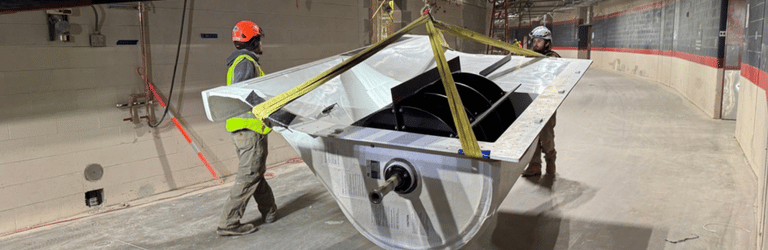
- Rigging and installation requirements
- Future access for service and maintenance
This is where customization can be especially important.
In an existing space, changes to pool dimensions, depth, seating, steps, treadmill placement, flow configuration, or other elements may help the new hydrotherapy pool fit the available footprint while still supporting the program.
Our blog post “Why Customization Matters More Than Most Buyers Realize” explores this further, including why therapy and training pools should be planned around the actual users, program needs, and physical environment.
Architects, contractors, facility teams, installers, and the pool manufacturer may all need to be involved early. Coordinating these details before equipment is selected can help the replacement pool fit the space more naturally and reduce workarounds later.
Involve the People Who Use the Space
The people who use and support the hydrotherapy space should be involved early. Athletic trainers, clinicians, facilities teams, architects, and contractors can help identify priorities, constraints, and opportunities before design decisions are finalized.
UConn’s athletic training facility renovation is a good example. In an interview with Training & Conditioning, senior associate athletic trainer Patti Kula described how staff helped shape the renovation from the beginning, with hydrotherapy planned alongside rehabilitation, recovery, treatment, and daily workflow.
She also noted that the existing pool footprint created constraints, while elements of the SwimEx system could be adjusted to fit the space and support the program.
Read Training & Conditioning’s Q&A on UConn’s athletic training facility renovation.
Prioritize Reliability and Maintainability
Features matter, but the day-to-day ownership experience matters just as much.
A replacement hydrotherapy pool may remain in service for many years, so consider how the system is constructed, how components are accessed, and what routine maintenance will involve.
Questions to ask include:
- What materials are used in the pool structure?
- How accessible are pumps, filtration, controls, and other components?
- What routine maintenance is required?
- Are components designed to be serviced or replaced?
- How readily are replacement parts available?
- Who provides technical support?
- How easy is it to get clear answers when questions arise?
SwimEx® therapy and training pools use durable fiberglass construction and a maintainable design intended to make long-term ownership more straightforward.
Responsive support is another part of the equation. A pool is easier to own when facility teams know where to turn for guidance and can get clear answers throughout the life of the system.
We explore that relationship further in our blog post, “What Premium Support Really Looks Like When Buying a Therapy or Training Pool.”
Consider the Water Environment You Need
Replacing a hydrotherapy pool also creates an opportunity to think carefully about how the water environment should support the program.
Jet, propeller, and paddlewheel systems move water differently. The right approach depends on what users will actually be asked to do in the pool.
SwimEx uses a paddlewheel current designed to provide wide, deep, consistent water movement across the working area. Configurable flow allows resistance to be adjusted around different therapy and training needs.
For programs incorporating an underwater treadmill, depth can also be part of the water-environment discussion. Changing water depth changes buoyancy and weight-bearing support, which can be useful during gait work, rehabilitation, and progressive reconditioning.
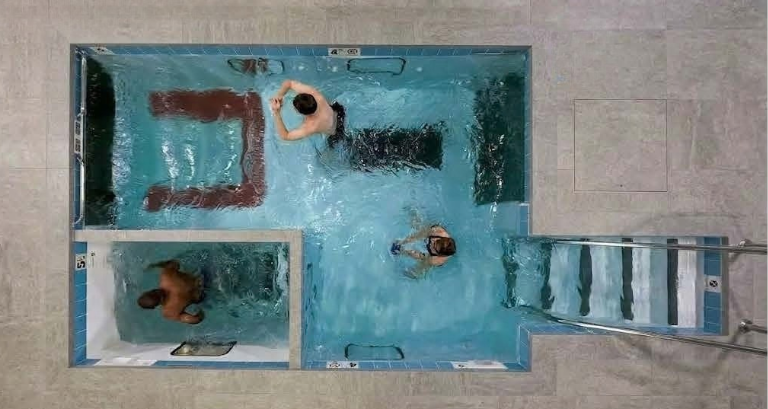
The SwimEx DepthSelect™ provides adjustable depth within the treadmill zone to support staged weight-bearing progression, without the need for full floor movement. The rest of the pool can retain its configured depth while the treadmill area is adjusted for the intended activity.
DepthSelect™ is one option within a broader planning process. The important question is how flow, depth, and other water features work together to support the facility’s program.
Rather than choosing technology from a feature list alone, start with the activities the hydrotherapy pool needs to support and build the water environment around them.
Planning a Hydrotherapy Pool Replacement?
SwimEx can help your team evaluate the room, intended use, flow, depth options, configuration, equipment, and installation requirements early in the process.
You will get responsive support and clear answers as the project takes shape.