
Weight-bearing progression is rarely one big step.
In clinical rehab, it is usually a series of careful decisions. Early in recovery, a patient often needs more support, followed by increased loading and a controlled way to build tolerance as strength returns. The challenge is giving the body enough work to make progress while keeping each session manageable and repeatable.
That is where water depth matters.
In aquatic therapy for rehab, depth is not just a pool specification. It is a clinical tool. By changing how much of the body is supported by buoyancy, physical therapists and athletic trainers can help modify loading through different phases of recovery. With adjustable depth within the underwater treadmill zone, clinicians can support staged weight-bearing progression more precisely. The treadmill provides a consistent environment for gait and movement work, while water depth helps clinicians adjust weight-bearing demand as the patient progresses.
This post looks at how rehab teams use water depth alongside pace, duration, support, and exercise complexity, and what facilities should consider when evaluating adjustable-depth capabilities.
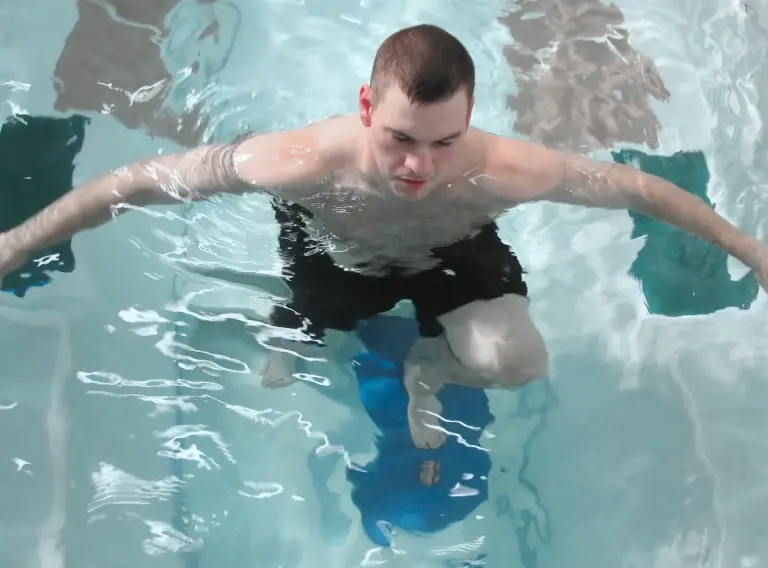
How Water Depth Supports Different Stages of Rehab
Water depth is one part of weight-bearing progression. Clinicians also adjust movement duration, treadmill speed, support, and exercise complexity based on the patient’s response.
| Stage of Rehab | Primary Session Goal | Role of the Water Environment | Other Variables Clinicians Adjust |
| Supported movement | Reintroduce comfortable, controlled movement | Greater depth provides more buoyant support | External support, pace, session length, and range of motion |
| Movement consistency | Repeat gait or functional patterns with control | Depth remains stable while tolerance is assessed | Repetitions, walking intervals, and rest periods |
| Progressive loading | Increase the amount of body weight managed | Depth is adjusted in stages to increase weight-bearing demand | Treadmill speed, duration, resistance, and movement demand |
| Transition preparation | Prepare for more demanding activity on land | Shallower water supports movement with greater weight-bearing demand | Exercise complexity, conditioning volume, and task-specific movement |
Progression is not always linear. A clinician may hold the depth steady, return to a more supported environment, or change another session variable depending on fatigue, movement quality, precautions, and the patient’s response.
Why Controlling One Variable at a Time Matters
In rehabilitation, changing several variables at once can make it harder to understand what is affecting the patient’s response. Variable water depth gives clinicians the option to preserve a familiar gait or movement task while changing the amount of buoyant support. Speed, duration, support, or exercise complexity can then be adjusted separately as appropriate.
A fixed-depth pool supports many applications, but it offers less flexibility when patients need different levels of support across recovery.
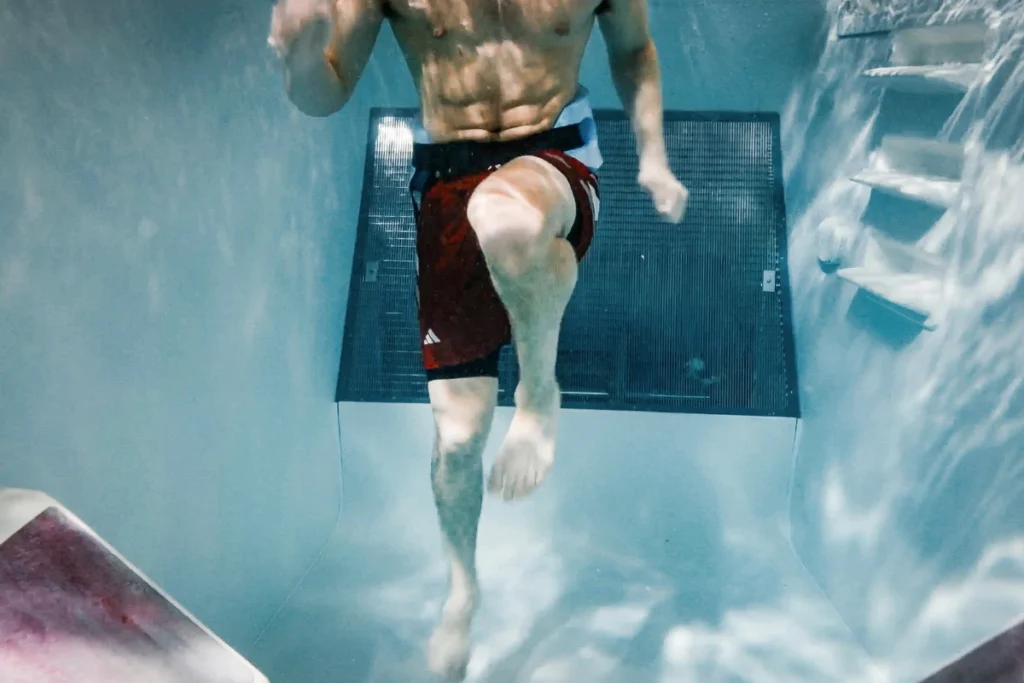
How Adjustable Depth Adds Value to a Rehab Program
Adjustable depth can add meaningful flexibility when a rehabilitation program serves patients with different heights, mobility levels, and stages of recovery.
It is especially useful when underwater treadmill work is part of the clinical program and therapists want to adjust weight-bearing demand without changing the movement task. This gives therapists another way to match the treatment environment to the patient without changing the core movement task.
For busy hospitals, outpatient clinics, and rehabilitation programs, this flexibility can make the pool easier to use across a broader range of patients and treatment goals.
The value is not simply that the water level can change. It is that clinicians have another practical way to match the treatment environment to the patient while keeping sessions consistent and repeatable.
This value also matters for athletic trainers supporting athletes through recovery, reconditioning, and return-to-play preparation. A therapy pool may need to support lower-load movement after injury in one session and higher-effort conditioning or strength work in the next. It likely needs to accommodate users of different heights, training demands, recovery timelines, and sport-specific goals across the day.
When the hydrotherapy pool is planned around how the facility will actually use it, it fits more naturally into daily care.
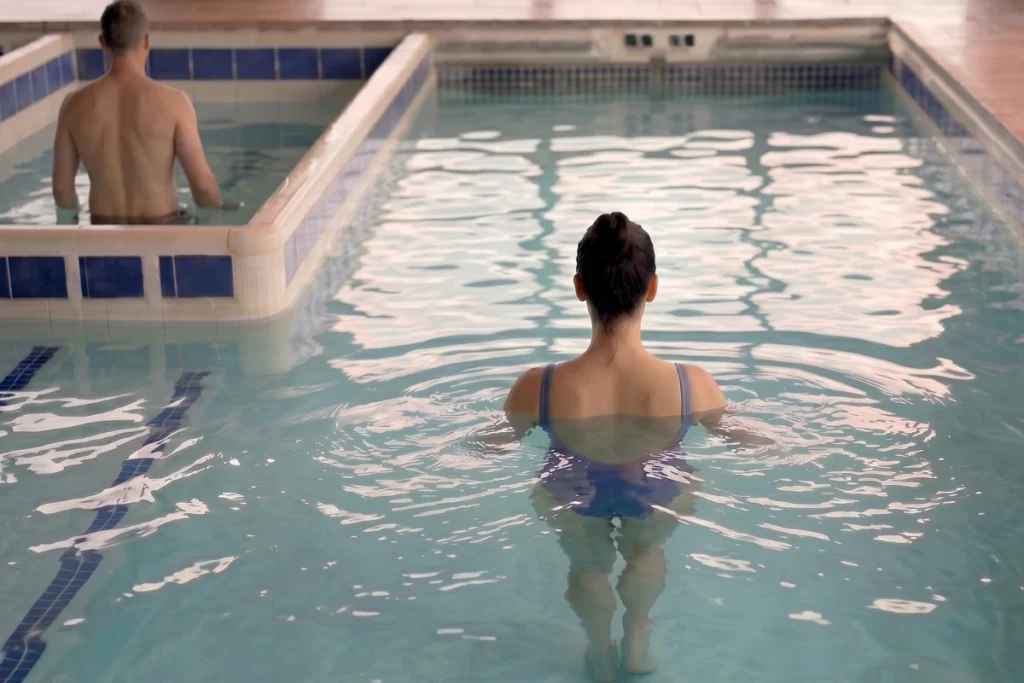
DepthSelect Series for Treadmill-Based Weight-Bearing Progression
The SwimEx DepthSelect™ Series places adjustable depth within the underwater treadmill zone, where clinicians use changes in buoyant support as part of staged gait and weight-bearing progression. It does this without the need for full floor movement.
The DepthSelect Series can help clinical teams:
- Adjust buoyant support during underwater treadmill gait and movement work
- Accommodate patients of different heights and stages of recovery
- Keep additional configured depth areas available for other therapy activities
- Change depth within the treadmill zone without shutting down the rest of the pool
Because depth adjustment is concentrated in the treadmill zone, additional configured areas of the hydrotherapy pool can support therapeutic exercise, mobility work, balance activities, or clinician-assisted movement. Depending on program needs, facilities can include 4-foot and 5-foot areas, with the option for a deeper section.
DepthSelect Series is part of a hydrotherapy pool environment designed for daily clinical use, with durable fiberglass construction and straightforward maintenance that helps make the pool easier to own over time.
Learn more about DepthSelect Series
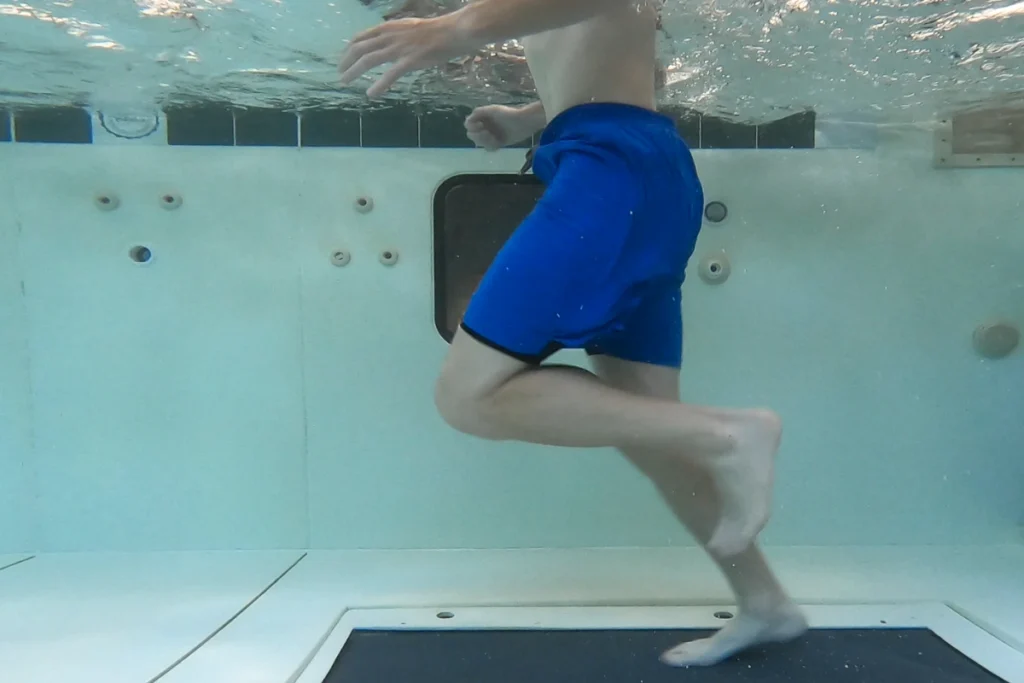
Frequently Asked Questions
No. Weight-bearing progression is not always linear. A clinician might keep the same depth across several sessions, return to a more supported setting, or adjust another variable first based on movement quality, fatigue, tolerance, precautions, and the patient’s plan of care.
The same water depth does not create the same level of immersion for every patient. Taller and shorter patients experience different amounts of support at the same fixed depth. Variable depth gives clinicians another way to better match the environment to the individual.
Yes. Depth does not need to change at every visit. Keeping the water level consistent while adjusting treadmill speed, duration, support, repetitions, or exercise complexity is always an option.
Facilities should also consider access, available therapy areas, patient circulation, staff workflow, routine maintenance, and how the hydrotherapy pool will fit into the room and daily schedule.
Teams can start by looking at how often they use underwater treadmill gait work, the range of patients they serve, and whether clinicians need to adjust weight-bearing demand while keeping the movement task consistent. It is also helpful to consider whether other areas of the pool need to remain available for separate therapy activities.
Planning a Hydrotherapy Pool Around Real Rehab Workflows
Variable depth is most valuable when it supports the way a rehabilitation program already works.
When thoughtfully integrated into the pool, adjustable depth can help the environment adapt to different patients, sessions, and program demands.
For busy rehab programs, that versatility matters. A therapy pool should help clinicians adjust to the patient, the session, and the schedule while supporting safe movement and steady progression.