
Facilities can support fall prevention and balance programs with a hydrotherapy pool designed around access, depth, staff workflow, and adjustable water current.
A balance program can be clinically sound and still be difficult to run if the aquatic environment is not planned around the people using it.
The better question is not simply what exercises will be performed. It is whether the hydrotherapy pool can support the program safely, consistently, and efficiently.
Access matters. Depth matters. Staff positioning matters. The environment should accommodate different mobility levels without creating unnecessary workarounds, and it should remain practical to operate over time.
Start With Access Before You Think About Exercise
Fall prevention starts before someone enters the water.
If pool access feels difficult, awkward, or intimidating, participation can become harder before the session even starts. That is why entry and exit should be part of the planning conversation from the beginning.
Facilities should think through:
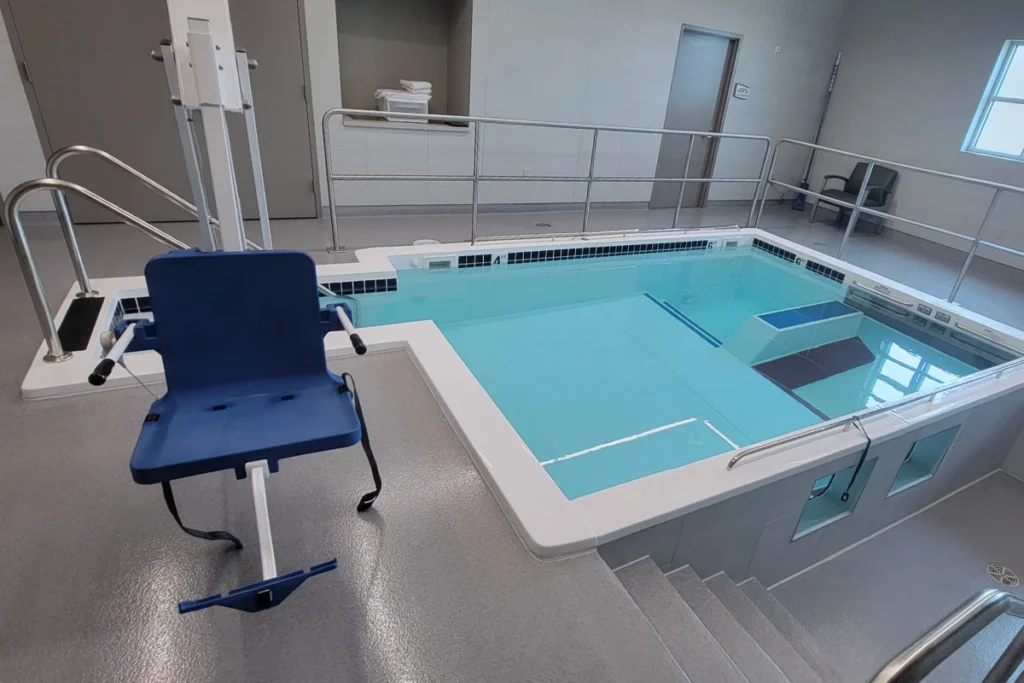
- Step configuration
- Handrail placement at entry and exit
- Lift access when appropriate
- Water depth at entry
- Space for hands-on assistance
- Clear movement paths around the hydrotherapy pool
The right configuration will depend on the people using the pool and the staffing model supporting them.
A physical therapy clinic may need room for close clinician assistance. A senior living community may need an entry setup that accommodates a wider range of mobility and confidence levels. A rehabilitation program may need to support people at different stages of recovery throughout the day.
The goal is not to add more access features. It is to choose the right ones.
Plan Depth Around How the Program Will Progress
Water depth changes how much support or challenge a patient feels in the pool. Having multiple depth options makes it easier to adjust the session as the patient progresses.
It changes the amount of buoyancy and weight-bearing demand a person experiences during movement. That makes depth relevant to balance, gait, mobility, and progressive loading.
From a facility planning standpoint, the goal is to accommodate the widest range of patients as efficiently as possible.
The same depth does not work equally well for every person or every activity. Height, mobility, comfort, and treatment goals can all affect how a session needs to be structured.
A hydrotherapy pool with multiple depth options gives clinicians more ways to adapt the environment without designing every session around one fixed condition. It can also make the space more efficient to operate by reducing the time, effort, and additional equipment needed to create different treatment conditions.
That matters both when planning the facility and in daily use. A configuration that can support a wider range of patients without frequent setup changes can help simplify workflows and make better use of the investment in the space.
The pool should support progression. It should not become the thing that limits it.
For a closer look at specific balance exercises, aquatic progressions, and how clinicians can adjust variables such as depth and water current, read our guide to aquatic therapy for balance training.
Think About Where Staff Need to Be
Aquatic programming is not only about the person in the water.
The clinician or staff member supporting the session needs the right working environment too.
Can they stay close enough to assist when needed? Can they move around the hydrotherapy pool without obstruction? Is there enough usable space for hands-on support? Can they observe posture and movement clearly?
These details matter in fall prevention and balance programs because the amount of assistance can change throughout a session.
Someone may need more support during entry and early movement, then less as the session progresses. Another person may need close assistance throughout.
The layout should make those transitions practical for the person delivering care or supervision. When staff have to compensate for a poor layout, the friction shows up quickly.
Make Support Features Work With Movement
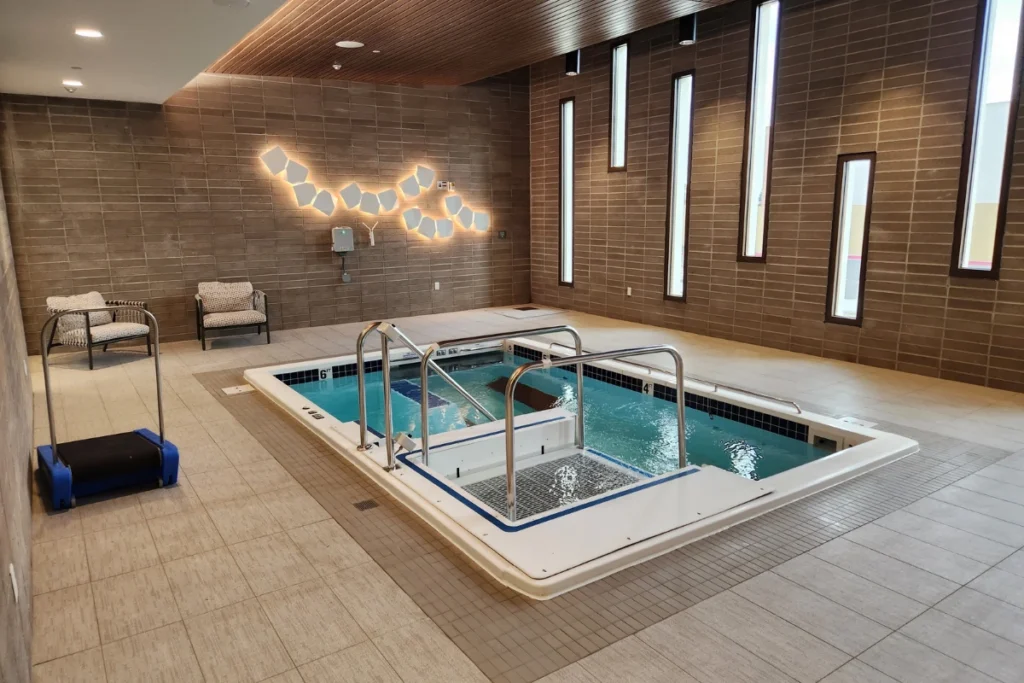
Once someone is in the hydrotherapy pool, handrails, benches, steps, and other support features can provide useful points of stability.
But placement matters as much as presence.
A handrail may support standing activities, transitions, or controlled movement. A bench can provide a place to pause or change position. In-pool steps can support functional activities.
These features should be planned around how the hydrotherapy pool will actually be used.
Too few support points can limit flexibility. Too many can reduce usable space or interfere with movement.
Good planning is about fit. The right combination should support mobility, confidence, and staff workflow without making the pool feel crowded or overly complicated.
Use Adjustable Water Current as a Progression Tool
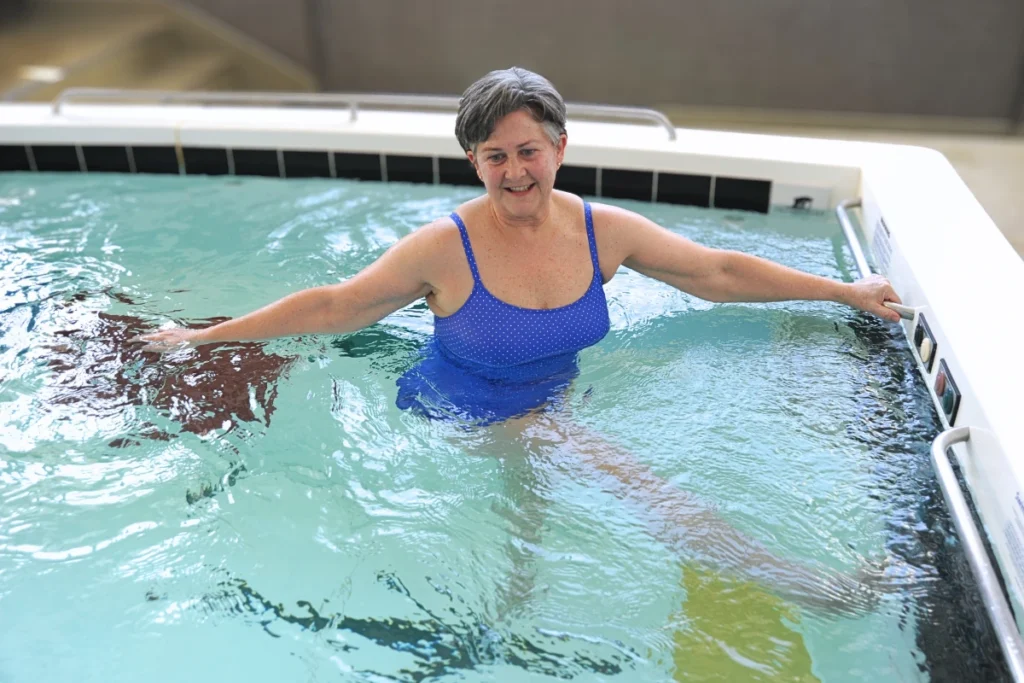
In a hydrotherapy pool with a current, water flow can add another variable to balance and mobility programming.
But it should come after the fundamentals are right.
Access, depth, support points, and staff workflow need to work first. Once they do, an adjustable water current can give qualified professionals another way to adjust the level of challenge.
The amount of resistance can be changed around the person, the activity, and the goals of the session. Flow can remain gentle when appropriate and increase as the patient progresses.
For clinicians, the important point is control.
The hydrotherapy pool should give clinicians and staff options without forcing every user into the same experience.
Reliability Matters in Fall Prevention Programs Too
A well-planned aquatic environment also has to be dependable.
If a hydrotherapy pool is difficult to maintain, complicated to operate, or frequently unavailable, even a well-designed program becomes harder to run consistently.
That is why reliability and long-term ownership should be part of the planning conversation early.
SwimEx® therapy and training pools use durable fiberglass construction and a maintainable design with serviceable components. Depth, access, seating, and water current can be planned around the needs of the facility and the way the hydrotherapy pool will be used day to day.
The result is an environment designed to be easier to own for years, without creating unnecessary work for the people responsible for it.
And when questions come up, responsive support and clear answers matter too.
The Environment and the Program Need to Work Together
Fall prevention and balance training are not supported by one feature alone.
The clinical program determines how balance training is delivered. The aquatic environment determines whether the space can support that work effectively.
For senior living communities, that can also mean considering how the aquatic space will support regular participation, staff workflow, and long-term wellness programming within the available footprint. Learn more about planning a hydrotherapy pool for senior living.
Planning a hydrotherapy pool for balance, mobility, rehabilitation, or fall prevention programming? SwimEx can help you think through access, depth, water current, staff workflow, and a maintainable design built around daily use.
Talk to a specialist